Swap BTC to XMR Without KYC
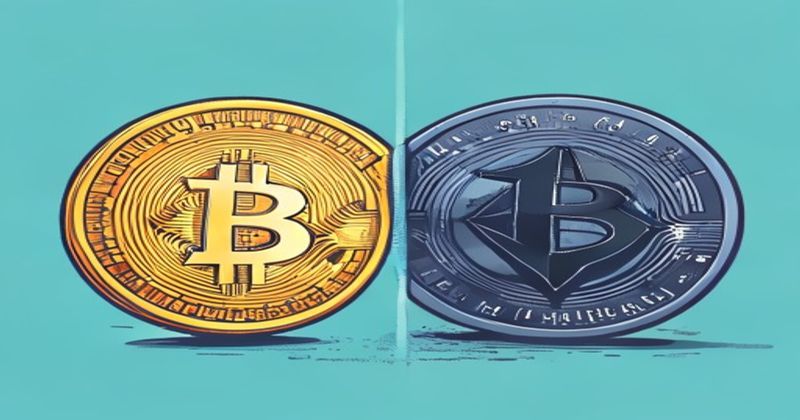
Bitcoin is pseudonymous. Every transaction is permanently visible on a public ledger. Monero is different — amounts, senders, and recipients are all obscured by default. If you want to move value out of Bitcoin's transparent chain and into genuine financial privacy, swapping BTC to XMR is the most direct path.
This guide explains how to do it without identity verification, without creating an account, and without handing your funds to a custodian. If you're new to using Bitcoin to acquire Monero in the first place, our how to buy Monero with Bitcoin guide is a more beginner-oriented intro. This page goes deeper on the no-KYC swap mechanic itself.
Why People Swap BTC to XMR
Bitcoin's transparency is a feature for some use cases and a liability for others. Once an address is linked to your identity — through an exchange, a purchase, or even a donation — your entire transaction history becomes traceable. Chainalysis, Elliptic, and similar firms specialize in exactly this kind of de-anonymization. Monero breaks that chain.
XMR uses ring signatures, stealth addresses, and RingCT to make transactions private by default. There's no "privacy mode" to opt into. Every Monero transaction looks the same to an outside observer.
Common reasons people make this swap:
- Reducing on-chain exposure from Bitcoin holdings
- Paying for goods or services without linking to a Bitcoin address
- General preference for financial privacy
- Avoiding surveillance from blockchain analytics firms
None of these require justification. Privacy is a legitimate default, not a red flag.
 BTC
▾
BTC
▾
 XMR
▾
XMR
▾
What "No KYC" Actually Means Here
KYC (Know Your Customer) is the process where exchanges collect your name, address, government ID, and sometimes a selfie before letting you trade. It's required by law for regulated exchanges in most jurisdictions — Coinbase, Kraken, Binance, and similar all require it.
Non-custodial, no-KYC swaps work differently. You send crypto, the service converts it, and sends the result to your address. No account. No ID. No stored data linking you to the transaction.
The tradeoff is real: if you send to the wrong address or make an error, there's no support ticket that can reverse it. You're responsible for double-checking everything before you send.
How to Swap BTC to XMR on Superswap.cx
Superswap supports the BTC → XMR pair directly. The process takes under two minutes to set up, and settlement typically happens within 5–30 minutes depending on Bitcoin network congestion.
Step 1: Get a Monero wallet address ready
You need somewhere to receive your XMR before you start. If you don't have a Monero wallet yet, Feather Wallet (desktop) and the official Monero GUI wallet are both solid options. Hardware wallet support is available through Ledger if you prefer cold storage. See our Monero wallet setup guide for a full walkthrough.
Copy your receiving address carefully. Monero addresses are long — 95 characters starting with "4". A single character error means lost funds.
Step 2: Select the BTC → XMR pair
Go to the BTC to XMR swap page or use the exchange widget directly. Select BTC as the currency you're sending and XMR as the currency you're receiving. No login required.
Step 3: Enter the amount and your XMR address
Type in how much BTC you want to convert. The estimated XMR output will update in real time. Superswap uses a flat fee built into the rate — no hidden charges added at the end.
Paste your Monero wallet address into the destination field. Check it twice.
Step 4: Send BTC to the deposit address
Superswap generates a one-time Bitcoin deposit address. Send exactly the amount shown from your wallet. You'll have a time window to complete the send — if it expires, the rate refreshes but your funds are still safe if you sent within the window.
Use a wallet you control (not an exchange) to send. Sending from a custodial exchange can complicate things if the exchange flags the outgoing transaction.
Step 5: Wait for settlement
Once your BTC transaction gets enough confirmations, the swap executes automatically. XMR is sent to your address. You'll typically see it arrive within 5–30 minutes. Bitcoin's confirmation time is the main variable — if the network is congested, it takes longer.
Ready to start? Open the exchange and select BTC → XMR.
Things That Can Go Wrong (and How to Avoid Them)
Wrong destination address. This is the most common and most costly mistake. Monero addresses are not recoverable if you send to the wrong one. Always paste, never type. Verify the first and last 6 characters after pasting.
Sending from a KYC exchange. If you send BTC directly from Coinbase, Kraken, or similar, the exchange knows you sent funds to a swap service. The swap itself is still private on Superswap's end, but your starting point is logged. For stronger privacy, withdraw BTC to a self-custody wallet first, then swap.
Slow Bitcoin confirmation. If you send with a very low fee, your transaction may sit unconfirmed for hours. Use mempool.space or a similar fee estimator and set an appropriate fee for current conditions.
Sending the wrong amount. If you send more or less than the quoted amount, the swap will still process at the correct rate for what was received — but the output will differ from the estimate. Superswap handles this automatically, though significantly off-quote deposits may trigger manual review.
Choosing the Best Site to Swap BTC to XMR
Several services support this pair. When evaluating options, the things that actually matter are:
- No registration required — any service requiring an account creates a data trail
- Non-custodial — funds should go directly to your address, not held in an account
- Transparent fee structure — flat fees in the rate are easier to evaluate than variable spreads
- Track record — newer services with no history carry more counterparty risk
- No transaction logging tied to identity — the whole point is privacy
Aggregator services like SwapZone show competitive rates but route through third-party providers — meaning your swap may pass through a service with different privacy practices than you expect. Direct swap services (Superswap, SideShift, TradeOgre, Trocador) give you more control over who handles your transaction. ChangeNOW and SimpleSwap support the pair but may trigger KYC verification on flagged transactions.
For a broader comparison of no-KYC options, see the best no-KYC crypto exchange guide. If you specifically want to use THORChain's native Monero integration for protocol-level decentralization, see the THORChain Monero swap guide.
Frequently Asked Questions
Is swapping BTC to XMR legal?
In most jurisdictions, yes. Owning and exchanging Monero is legal in the US, EU, and most of the world. A small number of countries restrict or ban privacy coins specifically — check your local laws if unsure. The act of swapping without KYC isn't inherently illegal: regulated exchanges are required to collect KYC, but non-custodial swap services operate in a different legal framework. Tax obligations on capital gains apply regardless of whether you completed KYC.
Does Monero need KYC?
Monero itself — the protocol — has no concept of KYC. Anyone can run the software, generate a wallet, and transact without any identity verification, the same way Bitcoin works at the protocol level. KYC is a requirement that regulated exchanges impose before letting you buy XMR with fiat or trade it on their platform. Non-custodial swap services like Superswap.cx don't require KYC because there's no account to attach identity to. Mining XMR also requires no KYC.
How long does a BTC to XMR swap take?
Typically 5 to 30 minutes end-to-end. Bitcoin requires 1 to 2 confirmations before the swap executes, and each block takes roughly 10 minutes — so the BTC side is the main variable. During mempool congestion, this can stretch to 45 minutes if you set a low fee. Monero's side settles within minutes once BTC is confirmed. To speed things up, send with an appropriate fee for current network conditions; mempool.space gives accurate fee estimates.
What's the minimum BTC to XMR swap amount?
Superswap shows the exact minimum in the exchange widget before you commit — it varies based on current network fees. The threshold exists so the flat service fee plus Bitcoin and Monero network fees don't consume an outsized share of small swaps. In practice, swaps under about $20 to $30 of BTC equivalent rarely make economic sense. There's no upper limit imposed by the service for typical swap sizes.
Do I need an account to swap BTC to XMR?
No. Superswap requires no registration, no email, no password, and no identity verification at any step. You provide your Monero destination address and send BTC to the deposit address shown. The service is non-custodial — funds are only held during the brief swap window before being sent directly to your wallet. No login means no swap history, so save the transaction ID when you initiate in case support is needed later.
Can I swap XMR back to BTC later?
Yes. The XMR → BTC pair uses the same no-KYC, no-account workflow. Paste your Bitcoin destination address, send XMR to the deposit address shown, and BTC arrives within 5 to 30 minutes. Monero requires 10 confirmations on its side before the swap executes — slower than BTC's 1 to 2 going the other direction — so XMR → BTC is usually a few minutes longer than BTC → XMR. See our XMR to BTC no-KYC guide for the full walkthrough.
Can I send BTC directly to an XMR wallet?
No. Bitcoin and Monero run on completely separate blockchains and use different address formats — sending BTC to an XMR address (or vice versa) results in lost funds with no recovery. You need a swap service to convert between them. On Superswap.cx, you send BTC to a Bitcoin deposit address generated for your swap, and the service sends XMR to the Monero address you provided. The two transactions happen on their own chains, never crossing.
What wallet should I use to receive Monero?
Use a wallet where you control the private keys. The official Monero GUI or CLI is the reference implementation. Feather Wallet is a lightweight desktop alternative that doesn't require running a full node. Cake Wallet works on iOS and Android. Ledger and Trezor support XMR via these wallets if you prefer hardware. Avoid sending XMR to centralized exchanges like Kraken or MEXC — some flag or freeze incoming transfers from privacy-coin sources, even when the asset is technically supported.
Can the FBI track Bitcoin transactions?
Yes. Every Bitcoin transaction is permanently visible on the public blockchain — sender address, recipient address, amount, timestamp. Law enforcement agencies including the FBI, IRS-CI, and DOJ routinely subpoena exchanges to link addresses to identities and use blockchain analytics from Chainalysis, Elliptic, and TRM Labs to follow funds across addresses. The 2022 Bitfinex hack recovery and the Silk Road forfeitures both relied on this. Monero's ring signatures and stealth addresses break the on-chain trail — which is precisely why people swap BTC to XMR.
What's the best site to swap BTC to XMR?
The criteria that matter: no registration (accounts create data trails), non-custodial flow (funds go directly to your address), transparent fees baked into the rate, and a track record. Aggregators like SwapZone show competitive rates but route through third-party providers — your swap may pass through a service with different privacy practices than expected. Direct swap services like Superswap, SideShift, or TradeOgre give more control over who handles your transaction.
Ready to Swap BTC for XMR?
5–30 min settlement · Flat fee · No account needed
Start Your BTC → XMR Swap →